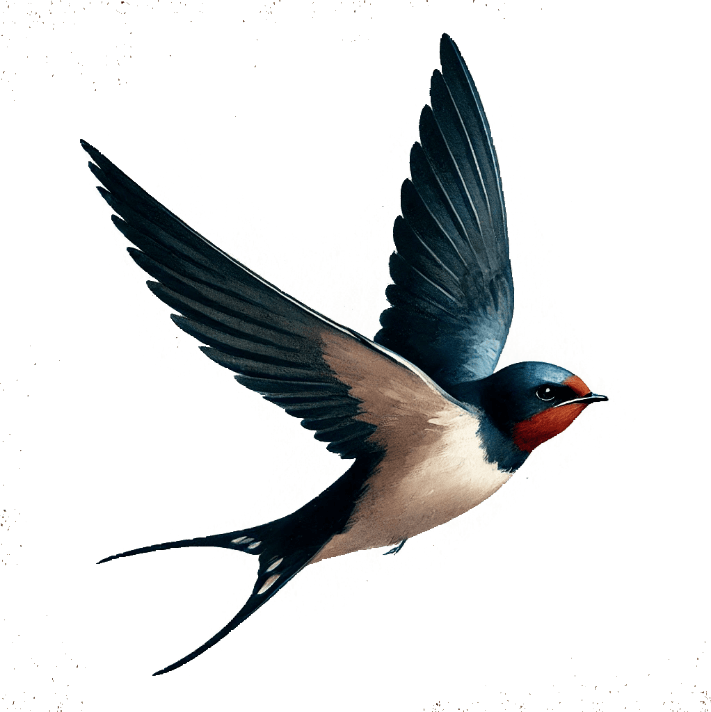
Mount Moreland Barn Swallows

Lake Victoria · Mount Moreland · KwaZulu-Natal

Come for sunset.
Stay for the swallows.

Open Friday to Sunday evenings

We open at 17:00. The roost comes about half an hour before sunset, and we close at sunset.

The evening

How an evening unfolds

Times follow the sunset, so they shift a little each week. Early and late in the season are usually the best evenings, though the weather has the final say.

  1. 17:00

    Opening

    Find a spot on the terraces, unfold the chairs and open the cooler box.

  2. Later

    The show begins

    Swallows gather and wheel over the reeds, building for up to an hour.

  3. Sunset −30

    The roost

    Busy sky to clear sky in five to ten minutes. Keep your eyes up.

  4. Sunset

    Sunset, and we close

    Pack up and head home. It's light enough that you won't need a torch.

Visit

Everything you need to know

Opening and entry

Friday, Saturday and Sunday, 17:00 to sunset. November to April.

Adult
R50
Child & Resident
R20

Card or Zapper only. We don't take cash.

All proceeds go to Mount Moreland Monitors.

What to bring

A camping chair, a cooler box, mozzie spray and binoculars. There's no food or drink on sale, so bring your own.

Parking

Free, and plenty of it, beside the site and across the road in the community park. Our volunteer on duty sits near the cars.

Seating and access

The site is terraced like an amphitheatre, with benches. The top level suits wheelchairs and prams.

Toilets

At the park gazebo, a 40 metre walk from the viewing site.

Weather

We open in rain and wind. If extreme weather calls an evening off, it'll say so at the top of this page.

Dogs and groups

No dogs, please. Bringing a school or a big group? Get in touch first.

Lake Victoria Barn Swallows Viewing Site, Mount Moreland

Get directions

The story

A roost worth protecting

Every October, barn swallows start arriving in KwaZulu-Natal from Europe, where they breed over the northern summer. Each bird weighs less than 20 grams, and some have come from as far north as Finland.

By day they spread out over the farms and valleys, hunting insects. In the half hour before sunset they come back to Lake Victoria and gather over the reeds, swirling and climbing until the sky is full of them. Then they drop into the reed bed all at once, and within minutes it's quiet. They sleep on the reeds overnight and leave again at first light.

People in Mount Moreland have watched this since the 1970s. The roost holds more than one percent of the world's migrating barn swallows, and BirdLife International declared the wetland an Important Bird Area in 2007.

When King Shaka International Airport was approved at La Mercy in 2006, the roost became a problem: a sky full of swallows next to a busy runway is a serious bird-strike risk. The community campaigned to protect it. One of the conditions of the airport's approval was that flights be planned around the swallows, and a bird-detecting radar at the end of the runway was among the first of its kind at a South African airport.

In 2026 the airport added a new 3D radar that can follow thousands of birds at once. Researchers at the University of KwaZulu-Natal are using it to learn when the swallows arrive, when they leave, and how they move each evening.

The viewing site first opened in 2006. After a few poor seasons it closed in 2019, and since 2024 it has been run by volunteers from Mount Moreland Monitors. Your entry pays for the site's upkeep, and every rand goes to the Monitors.

A year in two hemispheres They spend November to April at Mount Moreland, and breed in Europe from June to September.

Volunteer

Give an evening to the swallows

One volunteer opens up each evening: welcome visitors, take their entry on the card machine, and point the way to the toilets. Pick an evening and it's yours.

Choose an evening